A Triumphant Return to Form
Lewis Hamilton has once again reached the pinnacle of Formula 1 racing after a drought of two and a half years. The seven-time world champion claimed victory at the British Grand Prix, turning Silverstone into a festival of speed and emotion. This marks Hamilton’s 104th F1 win and his ninth on his home circuit—a victory that undoubtedly holds a special place in his heart after 57 races without a win since his last triumph in Saudi Arabia in 2001.
The atmosphere at Silverstone was electric as Hamilton finished the race, visibly moved and tearful, having delivered one of the most remarkable performances of his career on what he described as “one of the most brilliant days of my life.” This win is particularly poignant as it comes in what is rumored to be his final year with Mercedes, a team with which he has achieved much of his success.
Battle Through the Ranks
Hamilton’s victory was anything but straightforward. The day seemed poised to favor George Russell, but as the race progressed with changing conditions, Hamilton showcased his exceptional skill and experience. Russell, who had won in Austria, faced mechanical issues 18 laps from the end, allowing Hamilton to seize the opportunity and lead the race to victory. The conditions on the track were challenging, with rain making the circuit slippery, yet Hamilton managed to outpace his competitors, including a hard-charging Max Verstappen.

Max Verstappen: A Resilient Second
Max Verstappen, despite not winning, had a day of significant achievements. Starting from a less favorable position, he fought through the field, showing why he is the championship leader. Verstappen’s strategy involved a bold move to hard tires towards the end of the race, enabling him to close in on the leaders. He overtook Lando Norris in the final stages to secure second place, demonstrating resilience and tactical acumen. However, a late-race error by Norris and a strategic mishap by McLaren involving tire choice culminated in a disappointing finish for the team, which otherwise had the fastest car of the weekend.
Carlos Sainz: From Seventh to Fifth
Carlos Sainz also had a memorable race, starting from seventh on the grid. The Ferrari driver excelled in both dry and wet conditions, pushing his car beyond its limits and showcasing his skill as a driver. Sainz managed to climb to fourth at one point, eventually finishing fifth. He not only added 11 points to his championship tally but also claimed the fastest lap of the race, bringing him just four points behind his teammate Charles Leclerc, with one less race.
Fernando Alonso: A Race of Highs and Lows
Fernando Alonso experienced a rollercoaster during the British Grand Prix. Excelling in the rainy conditions, Alonso was aggressive and strategic. However, a mistimed switch to intermediate tires saw him lose crucial time—a misstep that cost him roughly ten seconds on the track. Despite this setback, Alonso managed to claw back two positions to finish eighth, a testament to his driving prowess and determination.
The Championship Outlook
As the Formula 1 season progresses, the championship is shaping up to be a closely fought battle among some of the most talented drivers in the sport. Hamilton’s resurgence adds another layer of excitement, proving that the veteran can still dominate on his day. Verstappen remains the man to beat, with his consistent performances keeping him at the top of the standings.
This victory at Silverstone is more than just another win for Hamilton; it is a statement of intent. As he navigates his final season with Mercedes, each race becomes a part of his vast legacy in the sport—a legacy characterized by resilience, skill, and an unparalleled drive to succeed.
In-Depth Analysis of Team Strategies and Pit Stops
Mercedes’ Strategic Masterstroke
Lewis Hamilton’s victory at Silverstone was not just a triumph of driving but also of strategic planning by Mercedes. Throughout the race, Mercedes exhibited a superior understanding of the changing track conditions. As rain intermittently wet the circuit, Mercedes made timely decisions regarding tire changes, which ultimately played a pivotal role in Hamilton’s victory. Their decision to keep Hamilton out during a light drizzle, when other teams opted for intermediate tires, allowed him to maintain his lead without losing time in the pits.
The team’s coordination during pit stops was flawless, minimizing time lost and maximizing Hamilton’s advantage on the track. This race highlighted Mercedes’ ongoing evolution in strategy, particularly in how they manage variable conditions—a critical factor given the unpredictable British weather.
McLaren’s Missed Opportunity
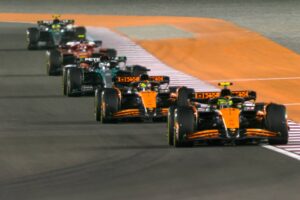
McLaren, despite having one of the fastest cars on the weekend, faced setbacks that cost them a potential podium finish. Lando Norris was in contention for a top spot but a late decision to switch to hard tires during his final pit stop proved less effective. This decision was compounded by a slow pit stop, which saw Norris lose valuable seconds, dropping him behind Verstappen.
The error was particularly painful for McLaren, as they had shown strong pace throughout the weekend, with both Norris and his teammate Daniel Ricciardo performing well in the initial stages of the race. The strategic misstep highlighted the fine margins between success and disappointment in Formula 1, where every second counts.
Red Bull’s Resilient Adaptation
Max Verstappen’s second-place finish was a testament to Red Bull’s adaptability under pressure. Initially not in an ideal position, Red Bull made a series of strategic calls that allowed Verstappen to capitalize on the misfortunes of others and his own relentless driving. The decision to shift to hard tires, while risky, provided Verstappen with the durability needed to push hard in the latter stages of the race.
Red Bull’s quick response to changing conditions and their effective communication with Verstappen ensured that they remained contenders for the victory, even as the race’s dynamics shifted rapidly. This adaptability is a hallmark of Red Bull’s strategy, often allowing them to outperform even when not starting from the front.
Ferrari’s Mixed Fortunes
For Ferrari and Carlos Sainz, the British Grand Prix was a race of what could have been. Starting seventh, Sainz managed to fight his way through the field, showing remarkable skill in both dry and wet conditions. Ferrari’s strategy to maximize their tire performance in varying conditions allowed Sainz to secure a fifth-place finish and the fastest lap of the race.
However, the same couldn’t be said for Charles Leclerc, who struggled to make an impact during the race. The team’s inability to consistently perform at the highest level has been a recurring theme this season, affecting their championship aspirations. The contrast between Sainz’s impressive drive and Leclerc’s challenges underscored the inconsistency that Ferrari has been grappling with throughout the year.
The Underdogs’ Day
Beyond the leaders, the race also saw noteworthy performances from the midfield teams. The Aston Martins managed to finish in the points, with both drivers showcasing their skills in challenging conditions. These results were crucial for the team’s morale and championship points, proving that strategic acumen can sometimes offset a lack of outright pace.
Alpine’s Esteban Ocon and AlphaTauri’s Pierre Gasly also delivered solid performances, navigating through the field and avoiding incidents to score valuable points for their teams. These performances highlight the depth of talent across the grid, where even teams with limited resources can challenge the front-runners on their day.
Conclusion: A Race to Remember
The 2022 British Grand Prix at Silverstone was not just another race; it was a spectacle of strategy, skill, and heart. Lewis Hamilton’s victory was a powerful reminder of his brilliance, while the performances from the likes of Verstappen, Sainz, and others showcased the competitive nature of Formula 1.
As the season progresses, the lessons learned here at Silverstone will undoubtedly influence the approaches of all teams. With every race, the narrative of the season becomes richer, blending the pursuit of technological excellence with the timeless drama of human competition. As fans and enthusiasts, we continue to be captivated by this incredible sport, eagerly anticipating each new chapter in the storied annals of Formula 1.
Silverstone has once again proven itself as a crucible of champions, a place where legends are forged and the spirit of Formula 1 burns brightest.